To reduce changeover time on an automatic shrink wrapping machine handling multiple product sizes, standardize product measurements, prepare sealing and shrink settings in advance, minimize mechanical adjustments, and verify the first finished packages before restarting full production. The biggest time savings usually come from a repeatable changeover procedure rather than simply increasing machine speed.
For manufacturers packaging different carton dimensions, gift boxes, cosmetics, household goods, or bundled products, frequent size changes can interrupt production and reduce equipment utilization. A machine may have sufficient rated speed, but if operators spend too long adjusting guides, sealing positions, conveyor settings, and shrink tunnel temperatures, actual output will fall short of expectations.
EPK Packingline provides automatic sealing and heat shrink wrapping machines for different product dimensions and packaging requirements. Its BF500+550POF continuous side sealer and 5545CLJS+5030POF vertical sealing system offer two practical examples of equipment designed for adjustable product handling. Understanding how to prepare and configure these systems helps buyers improve changeover efficiency before investing in a machine.
Why Product Size Changes Take Longer Than Expected
A product changeover involves more than changing the carton on the conveyor. Different product dimensions can affect film positioning, sealing length, sealing height, conveyor alignment, and the amount of heat required for consistent shrink results.
For example, changing from a short cosmetic box to a taller household product may require operators to adjust the product guides and sealing position. A larger carton may need a different film width or a revised tunnel setting. If the new product has sharp edges, an unusual shape, or a different packaging material, operators may also need to check whether the film seals and shrinks correctly.
Common sources of avoidable downtime include:
- Searching for product dimensions and previous machine settings.
- Adjusting several mechanical components one at a time.
- Using the wrong film width or film specification.
- Repeating unnecessary trial packages because settings were not recorded.
- Waiting for the shrink tunnel to stabilize after temperature adjustments.
- Discovering that the new product exceeds the machine's working range.
The first improvement is to identify which adjustments are genuinely necessary for each product family and prepare them before the previous production run ends.
Standardize Product Dimensions Before Changing Over
Accurate product data is the foundation of a fast changeover. Before production, record the length, width, height, weight, and packaging orientation of every product. Also identify the shrink film type, film thickness, and required package appearance.
Do not rely only on nominal carton dimensions. Actual products may vary slightly because of packaging tolerances, product contents, or carton construction. Measure representative samples from the production batch, especially when products are close to the machine's maximum working dimensions.
A practical product specification sheet should include:
- Product name or SKU.
- Minimum and maximum length, width, and height.
- Film material and thickness.
- Required sealing position and package orientation.
- Target production speed.
- Approved sample package or reference photograph.
Group products with similar dimensions and film requirements into production families. Moving from one product to another within the same family may require fewer adjustments than switching between products with very different dimensions and packaging materials.
Prepare Mechanical Adjustments in Advance
Mechanical adjustment is often one of the most time-consuming parts of a product changeover. Operators may need to reposition guides, adjust sealing areas, change film alignment, or modify conveyor settings. The more adjustments that require repeated measurement, the greater the risk of inconsistent results.
Where the machine design allows it, use clearly marked reference positions for common product sizes. Record the approved guide positions and sealing settings for each SKU. Operators can then use these records as a starting point rather than adjusting the machine from scratch every time.
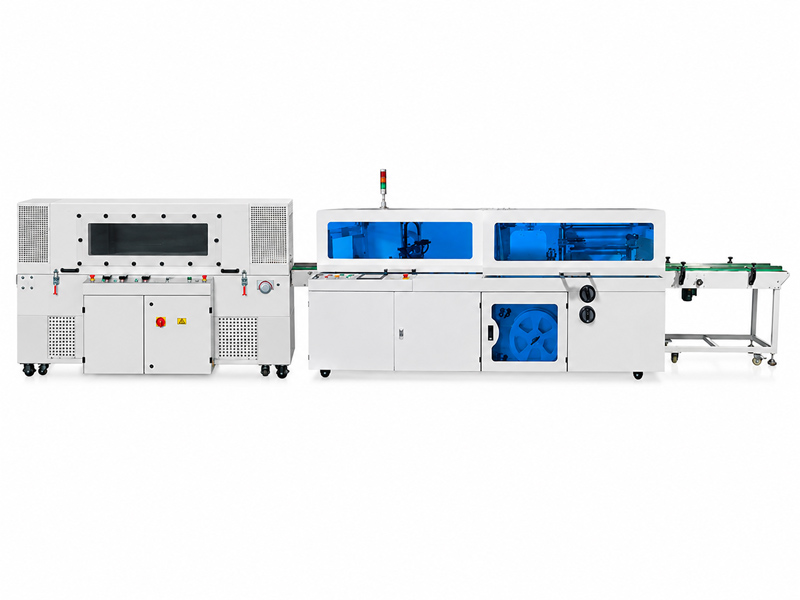
For a continuous side-sealing system, the sealing arrangement is especially important when product lengths and widths vary. EPK's BF500+550POF Automatic Continuous Side Sealer with Heat Shrink Tunnel uses a high-speed reciprocating sealing system and an integrated shrink tunnel. Its published technical specifications include a 530 mm sealing knife and a package size range of L(100–1000) × W(60–400) × H(5–120) mm.
This working range gives buyers a useful reference when evaluating multiple product sizes. Products that fit within the stated range may be suitable for the same machine configuration, although actual suitability should still be confirmed through sample testing and the required sealing layout.
For manufacturers handling frequent product changes, review the EPK BF500+550POF automatic continuous side sealer and confirm the adjustment points available for the products in your production schedule.
Optimize Sealing and Shrink Tunnel Settings
Correct mechanical positioning is only part of the process. Different product sizes and film materials may require different sealing temperatures, conveyor speeds, and shrink tunnel conditions.
When a product becomes larger, the film surface area and package geometry may change. A taller product may also interact differently with the hot air inside the tunnel. If the temperature or conveyor speed is unsuitable, the result may include loose film, wrinkles, burn marks, weak seals, or uneven shrinking.
Operators should therefore treat sealing and shrink settings as a coordinated process. First confirm that the film is compatible with the product and machine. Then adjust sealing conditions and tunnel settings according to the film supplier's recommendations and the results of sample testing.
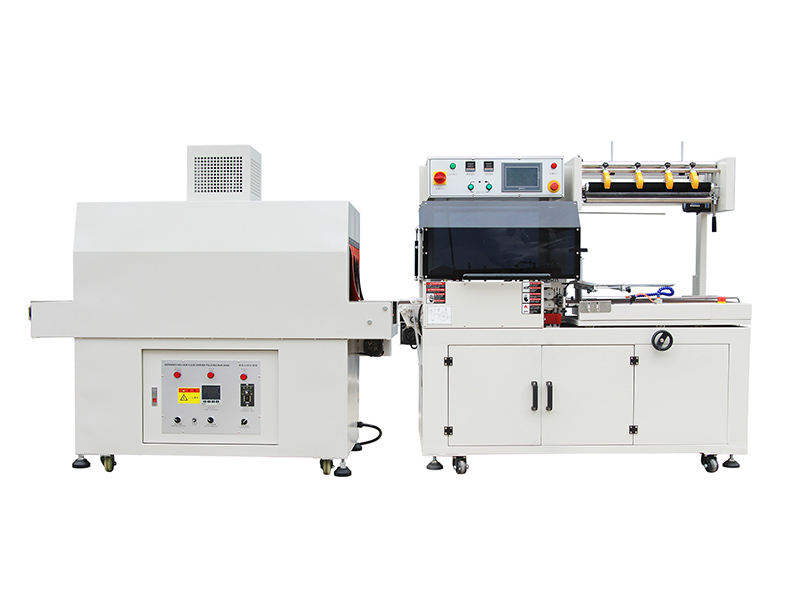
EPK's 5545CLJS+5030POF Vertical Sealing Machine and Electric Heat Shrink Machine uses a servo-driven sealing and cutting mechanism, a non-stick sealing blade, and an Omron digital temperature controller. The published sealing temperature adjustment range is 0–350°C. Its listed package dimensions are L+H ≤ 480 mm and W+H ≤ 380 mm, with H below 170 mm, a width range of 20–350 mm, and a length range of 100–450 mm.
The machine also has a published packing speed of 28 m/min. This is a conveyor or machine speed specification, not a guaranteed number of finished packages per minute. Actual output depends on product dimensions, film characteristics, operator handling, and production conditions.
For applications where vertical sealing is suitable, the EPK 5545CLJS+5030POF vertical sealing and heat shrink system is worth evaluating for its adjustable sealing and temperature control features.
Create a Repeatable Changeover Checklist
A documented changeover procedure helps different operators achieve consistent results. Instead of relying on individual experience, production teams can follow the same sequence for each product family.
A practical procedure should cover the following actions:
- Prepare: Confirm the next product's dimensions, film type, and approved settings before the current batch finishes.
- Clear: Remove remaining products and film from the previous run, following the machine's safety procedure.
- Adjust: Reposition guides, sealing components, and conveyor settings according to the new product specification.
- Configure: Set the sealing temperature, tunnel temperature, and conveyor speed based on the approved process.
- Test: Run sample products and inspect seal strength, film distribution, wrinkles, and overall package appearance.
- Approve: Confirm the first acceptable package with the production or quality team before releasing the full batch.
Keep a record of the actual time required for each step. This helps managers identify whether mechanical adjustment, temperature stabilization, film loading, or quality approval is causing the longest delay.
Choose a Machine That Matches Your Product Range
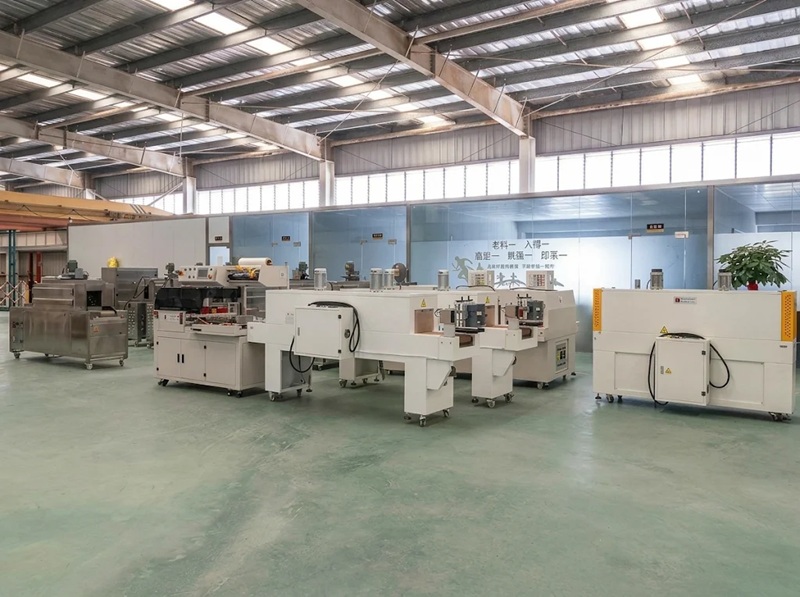
Not every automatic shrink wrapping machine is equally suitable for frequent size changes. Buyers should compare the complete working range with their current and future product dimensions. A machine that handles today's largest carton may not accommodate a new product planned for next year.
Check the sealing knife size, maximum package dimensions, minimum product height, conveyor width, film compatibility, temperature control, and adjustment method. Also ask which adjustments are manual and which are controlled through the machine interface. Do not assume that an automatic machine includes automatic recipe storage or one-touch changeover unless the manufacturer confirms that feature.
For a high-volume operation, the BF500+550POF is listed with a packaging speed of 70–80 pieces per minute and power consumption of 20.5 kW, including 6.5 kW for the side sealer and 14 kW for the heat tunnel. This provides a useful technical reference for production planning, but the actual output will vary with the product and operating conditions.
Businesses comparing different configurations can explore EPK's automatic sealing and heat shrink wrapping machine range to identify equipment suited to their product dimensions, packaging materials, and required production capacity.
How to Measure Changeover Improvement
To understand whether a new procedure is working, measure changeover time consistently. Start the timer when the last acceptable package from the previous product is completed. Stop it when the first approved package of the next product is produced.
Changeover Time = Time of First Approved New Product − Time of Last Approved Previous Product
Track the result for several product transitions rather than relying on one trial. Also record rejected packages and material waste during startup. A shorter changeover is only useful if the new product meets the required packaging quality.
For manufacturers handling multiple SKUs, the most effective improvement usually combines accurate product data, prepared film materials, standardized machine settings, trained operators, and a machine with a suitable adjustment range. EPK Packingline can assess product dimensions and packaging requirements to help identify an appropriate sealing and shrink wrapping configuration.
Frequently Asked Questions
How can I reduce changeover time on an automatic shrink wrapping machine?
Prepare product dimensions and film specifications in advance, group similar products, standardize guide positions, record approved machine settings, and use a repeatable changeover checklist. Always verify the first finished package before restarting full production.
What machine settings usually need to change when product sizes vary?
Common adjustments include product guides, film alignment, sealing position, conveyor speed, sealing temperature, and shrink tunnel temperature. The exact adjustments depend on the machine design, product dimensions, and shrink film.
Can one shrink wrapping machine handle multiple product sizes?
Yes, if the products fall within the machine's specified working range and the sealing and shrink systems can accommodate their dimensions. Buyers should confirm minimum and maximum package sizes and test representative samples before purchasing.
What is the package size range of the EPK BF500+550POF?
EPK lists a package size range of L(100–1000) × W(60–400) × H(5–120) mm for the BF500+550POF automatic continuous side sealer with heat shrink tunnel.
What is the packing speed of the EPK BF500+550POF?
The published specification is 70–80 pieces per minute. Actual production output depends on product size, film, packaging configuration, and operating conditions.
Does the EPK 5545CLJS+5030POF support different product dimensions?
Its published working range includes L+H ≤ 480 mm, W+H ≤ 380 mm, H below 170 mm, width of 20–350 mm, and length of 100–450 mm. Confirm the complete package geometry and application suitability with EPK.
What information should I provide when requesting a shrink wrapping machine quotation?
Provide product length, width, height, weight, photos or videos, film material and thickness, target output, package appearance requirements, and the number of product sizes handled. These details help the manufacturer assess machine suitability and changeover requirements.