To prevent foaming during high-speed liquid filling, manufacturers need to control how liquid enters the container, reduce unnecessary turbulence and select a filling system suited to the product’s viscosity and foaming behaviour. The most effective approach combines a stable product supply, suitable filling nozzles, controlled filling speed and a filling sequence that limits splashing. Simply slowing down the entire production line is rarely the best long-term solution. For manufacturers choosing an industrial filling machine, the key is to test the actual liquid in the intended bottle and confirm that the machine configuration can maintain filling quality at the required output.
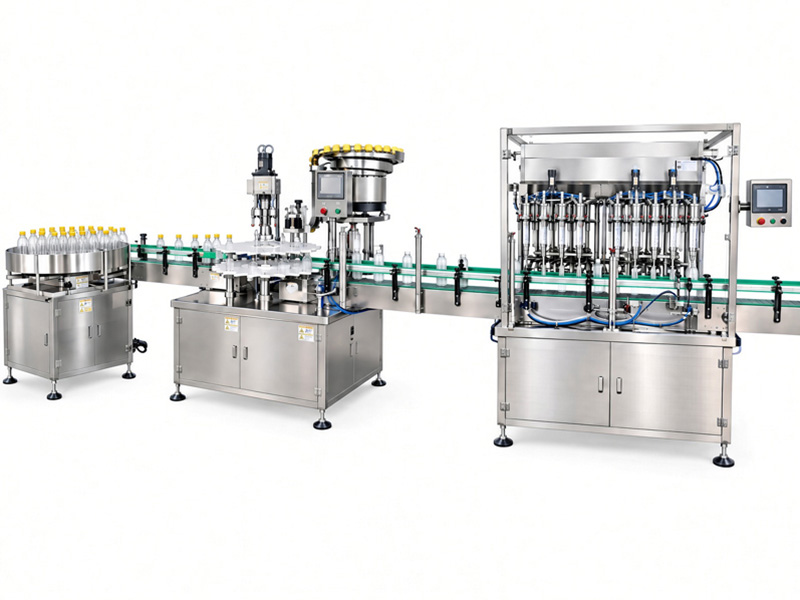
Foaming is a common concern when filling detergents, shampoos, liquid soaps, sauces, beverages and other products that trap air during agitation. Excessive foam can cause overflowing, inconsistent fill levels, product residue around bottle openings and contamination before capping. EPK Packingline provides bottle filling and capping equipment for liquid and viscous products, including the LF-2 double-head servo piston filling system and the automatic LF-10 ten-head piston filling and capping machine. The right selection depends on product behaviour, container design, filling volume and production requirements.
Why Does Foam Develop During High-Speed Liquid Filling?
Foam forms when gas becomes dispersed in a liquid and is stabilised by the product’s physical or chemical properties. During filling, a fast-moving liquid stream can strike the bottom, sidewall or existing liquid surface of a bottle. This impact creates turbulence and can draw air into the product. The risk is higher for formulations containing surfactants, such as shampoos, detergents and liquid hand soaps, because these ingredients can help stabilise bubbles.
Several operating conditions can make the problem worse: excessive filling velocity, a large distance between the nozzle and the liquid surface, air in the product supply, unsuitable nozzle geometry and changes in product viscosity or temperature. A useful first step is to identify where the foam originates: inside the product tank, along the transfer line, at the filling nozzle or after the liquid enters the bottle. This makes troubleshooting more targeted and avoids unnecessary changes to the entire production process.
Control the Filling Flow Instead of Only Reducing Line Speed
One practical way to reduce foaming is to control the liquid flow throughout the filling cycle. A bottle may tolerate a faster filling rate at the beginning, when there is more space between the nozzle and the liquid surface, but require a gentler flow as the fill level rises. A two-stage or multi-stage filling strategy can therefore be worth evaluating for foam-sensitive products.
In a typical approach, the initial filling stage uses a controlled flow to establish the liquid level without excessive splashing. The flow is then adjusted as the container approaches its target volume. The exact settings depend on the product and filling system, so they should be established through production trials rather than copied from another liquid or bottle size.
Where the machine design allows it, a bottom-up or diving-nozzle filling arrangement can also be evaluated. The nozzle starts near the bottom of the container and rises as the liquid level increases, reducing the distance the liquid falls. This can help limit splashing in suitable applications. However, it is not a universal solution: nozzle movement, bottle geometry, cleaning requirements and cycle time must all be considered. Buyers should confirm whether this arrangement is available on the proposed machine rather than assuming it is included as standard.
Choose a Filling Nozzle That Matches the Product
The filling nozzle is one of the most important contact points in a liquid filling system. Its diameter, outlet geometry, shut-off mechanism and position can influence flow stability and product handling. A nozzle designed for a thin, free-flowing liquid may not perform equally well with a foaming detergent or a thicker cosmetic formulation.
For foam-sensitive liquids, manufacturers should discuss whether a suitable low-turbulence outlet, controlled shut-off or anti-drip arrangement can be incorporated. Anti-drip technology is useful for limiting residual liquid after the filling cycle, but it should not be confused with a dedicated anti-foaming function. Preventing drips and preventing foam are related process concerns, but they are not the same engineering requirement.
EPK's Filling & Capping Machines category covers automatic and semi-automatic bottle filling solutions for liquid and viscous products. When requesting a proposal, provide product information, a bottle drawing and the target fill volume so the appropriate filling head can be evaluated.
Diagnose Common Foaming Problems on the Production Line
Before changing equipment, production teams should connect each visible symptom with a likely process cause. The following table is a practical troubleshooting guide. It describes possible causes and actions to evaluate; it is not a list of guaranteed machine functions or preset parameters.
| Observed problem | Possible cause | What to check | Improvement to evaluate |
|---|---|---|---|
| Foam appears as liquid enters the bottle | High impact or turbulent flow | Nozzle position, flow rate and bottle geometry | Adjust the filling profile or evaluate a suitable nozzle arrangement |
| Foam increases near the target fill level | Liquid stream hitting the rising surface | Late-stage filling speed and nozzle-to-liquid distance | Evaluate a slower final filling stage |
| Bubbles are visible before filling | Air introduced during mixing, pumping or transfer | Tank agitation, pump operation, pipework and return flow | Review product handling and assess suitable deaeration methods |
| Foaming varies between batches | Changes in viscosity, temperature or formulation | Batch records and product conditions | Standardise product conditions and validate settings for each formulation |
| Liquid remains around the bottle opening | Nozzle dripping or poor shut-off | Nozzle closure and residual product after filling | Discuss an appropriate anti-drip filling head |
This diagnosis helps determine whether the problem is primarily related to product preparation, liquid transfer or the filling operation itself. It also gives buyers a more useful starting point for discussing equipment requirements with a machine supplier.
Match EPK Filling Equipment to Your Production Requirements
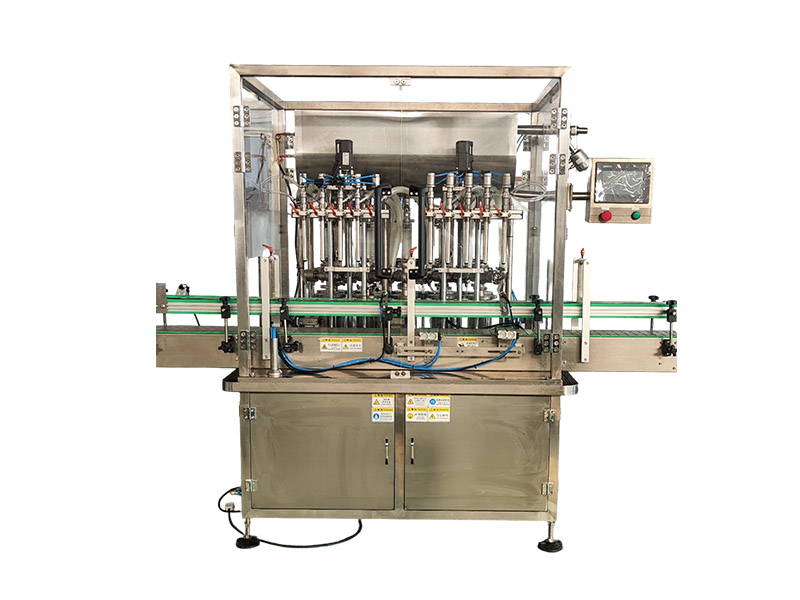
EPK Packingline lists two relevant piston-filling configurations for bottle applications. The LF-2 Double-Head Servo Piston Filling Machine with Semi-Automatic Capping combines two servo-controlled piston filling heads with semi-automatic capping. EPK positions this configuration for small and medium production batches, flexible product changes and manufacturers that do not require a fully automated bottling line.
For more automated production, EPK offers the LF-10 Automatic 10-Head Piston Filling and Capping Machine. It integrates ten servo piston filling heads with automatic cap sorting, feeding and capping. Its published features include PLC and touchscreen control, servo parameter memory, a high-level hopper with level control, a one-click cleaning function and filling heads that can be equipped with anti-drip sealing and collection trays according to product characteristics.
The following comparison summarises the specifications published by EPK. Filling volume is customised, and the stated filling speed depends on the selected filling volume. Actual output must therefore be confirmed for the product and bottle being used.
| Specification | EPK LF-2 | EPK LF-10 |
|---|---|---|
| Filling configuration | 2 servo piston heads | 10 servo piston heads |
| Capping arrangement | Semi-automatic capping | Automatic cap sorting, feeding and capping |
| Filling volume | Customised to customer requirements | Customised to customer requirements |
| Filling speed | Related to filling volume | Related to filling volume |
| Power supply | 380 V, 3-phase, 50–60 Hz | 220 V, single-phase, 50–60 Hz |
| Power consumption | 4 kW | 6 kW |
| Air supply | Not specified on the cited product page | At least 0.6 MPa |
| Filling machine dimensions | 2000 × 1000 × 1700 mm | 2400 × 1000 × 1900 mm |
| Capping machine dimensions | 2000 × 700 × 1700 mm | 2400 × 1500 × 2400 mm |
The LF-10 product page also lists PTFE food-grade seals, adjustable capping parameters and optional anti-drip sealing with collection trays. These are useful details for buyers evaluating product contact, cleaning and bottle handling. However, anti-drip performance should not be presented as proof of foam-free filling. Neither product page publishes a universal anti-foam guarantee or a fixed output rate for every liquid.
Validate Foam Control Before Purchasing a High-Speed Filling Line
A machine should be evaluated under conditions that reflect real production. During a filling test, observe foam height, filling consistency, bottle overflow, nozzle residue and the cleanliness of the container neck before capping. Test the normal operating speed as well as expected product and packaging variations.
When comparing supplier proposals, ask for the test conditions and acceptance criteria in writing. These should include the product name and viscosity range, temperature, bottle dimensions, target fill volume, required output and nozzle configuration. If the product changes between batches, clarify how operators can adjust and store the relevant parameters.
For a quotation from EPK Packingline, provide the liquid type, product characteristics, bottle size, target filling volume, required production speed and available factory utilities. Include a video of the current filling process if foaming is already occurring. This information allows the technical team to assess whether the LF-2, LF-10 or another customised configuration is more appropriate.
Frequently Asked Questions About Foam-Free Liquid Filling
What is the main cause of foaming during high-speed liquid filling?
Foaming is commonly caused by air being introduced into the liquid through turbulence, splashing or agitation. Product formulation, viscosity, temperature and filling conditions all influence how much foam forms and how long it remains.
Does reducing filling speed always prevent foam?
No. Lower speed may reduce turbulence, but it does not address every source of air entrainment. A suitable nozzle, controlled filling profile and stable product supply may be needed as well.
Can a diving nozzle reduce foaming?
A bottom-up or diving-nozzle arrangement can reduce the distance liquid falls into a container and may limit splashing. Its suitability depends on the product, bottle design, cleaning requirements and machine configuration.
Does EPK's LF-10 have an anti-foam filling system?
EPK's published LF-10 page specifies ten servo piston filling heads and optional anti-drip sealing and collection trays. It does not identify a dedicated anti-foam system as a standard feature. Buyers should discuss the required nozzle and filling method with EPK and validate performance through product trials.
Which EPK filling machine is suitable for higher-volume production?
The LF-10 is EPK's automatic ten-head piston filling and capping configuration, designed for coordinated filling and capping operations. Actual output depends on filling volume, product properties and operating conditions, so the required speed should be confirmed with EPK.
What information should I provide when requesting a liquid filling machine quotation?
Provide the product type, viscosity or formulation details, foaming behaviour, filling volume, bottle dimensions, target output, power supply and compressed-air availability. A product sample or filling video can help the supplier assess the application more accurately.
Discuss Your Liquid Filling Application with EPK Packingline
Preventing foam at high speed requires more than choosing a machine with a higher nominal output. It requires a filling process designed around the liquid, container and production target. EPK Packingline offers LF-2 and LF-10 servo piston filling configurations for different bottle-filling requirements, with customised filling volumes and machine arrangements.
Send EPK your product details, bottle specifications, target fill volume and required production speed. If foam is affecting your current line, include a short video of the filling process. The EPK team can then review the application and discuss a suitable filling and capping configuration for your production needs.