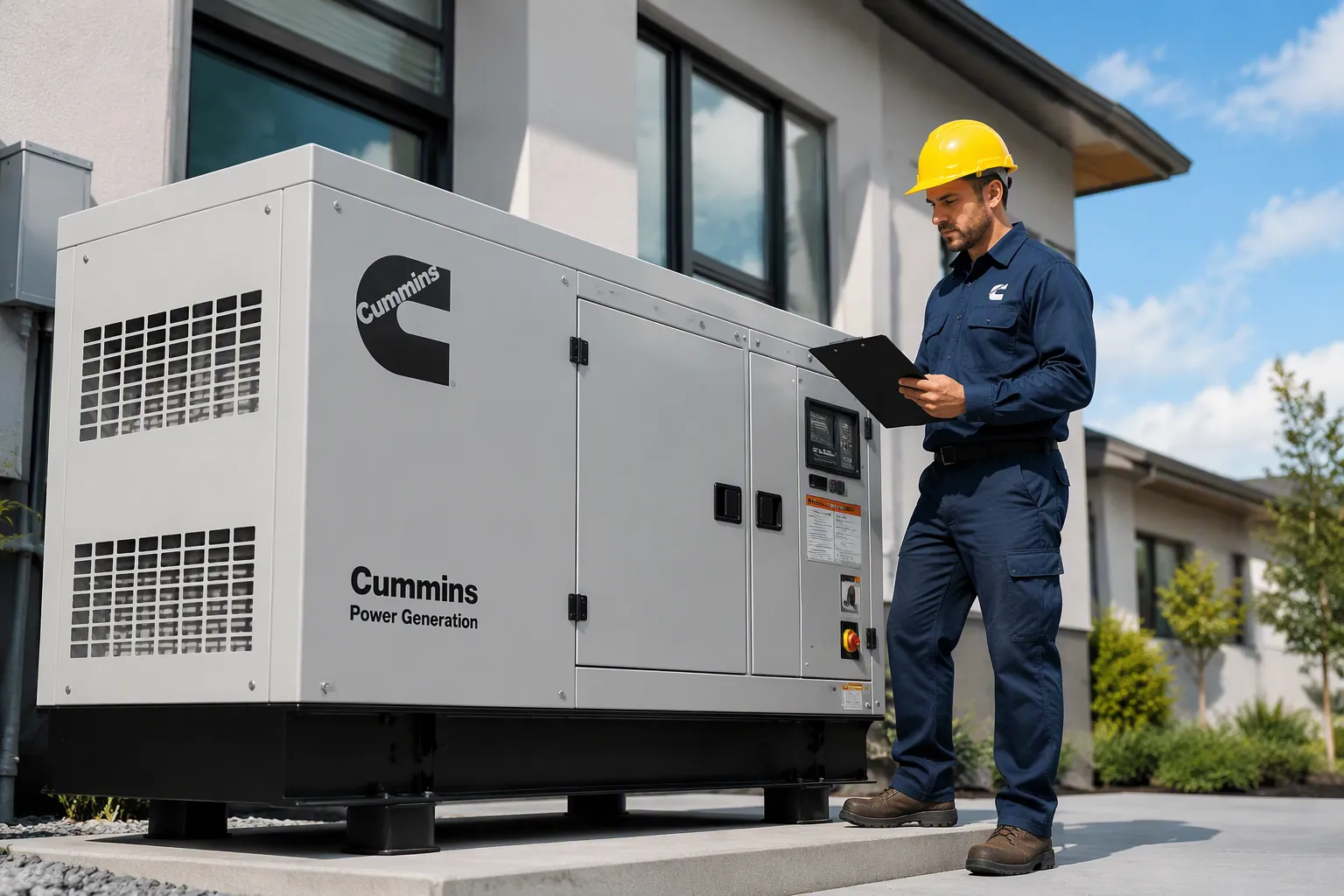
You face 1.4 to 1.5 power outages annually in the U.S. on average, according to EIA and Utility Dive data. Start by listing every essential appliance, light, and system you must keep running. Add running watts, then include starting watts for motors and compressors to find your peak demand. Select a Cummins diesel generator set with a standby rating at least 20% above that total.
Key Takeaways
-
List your essential appliances. Add their total starting wattage. Select a generator with 20% more capacity.
-
Choose a standby-rated generator for backup power. Adjust for altitude and high temperature conditions.
-
Install an automatic transfer switch and weatherproof enclosure. Follow the 400-hour maintenance schedule.
Assess Your Power Needs Before You Buy
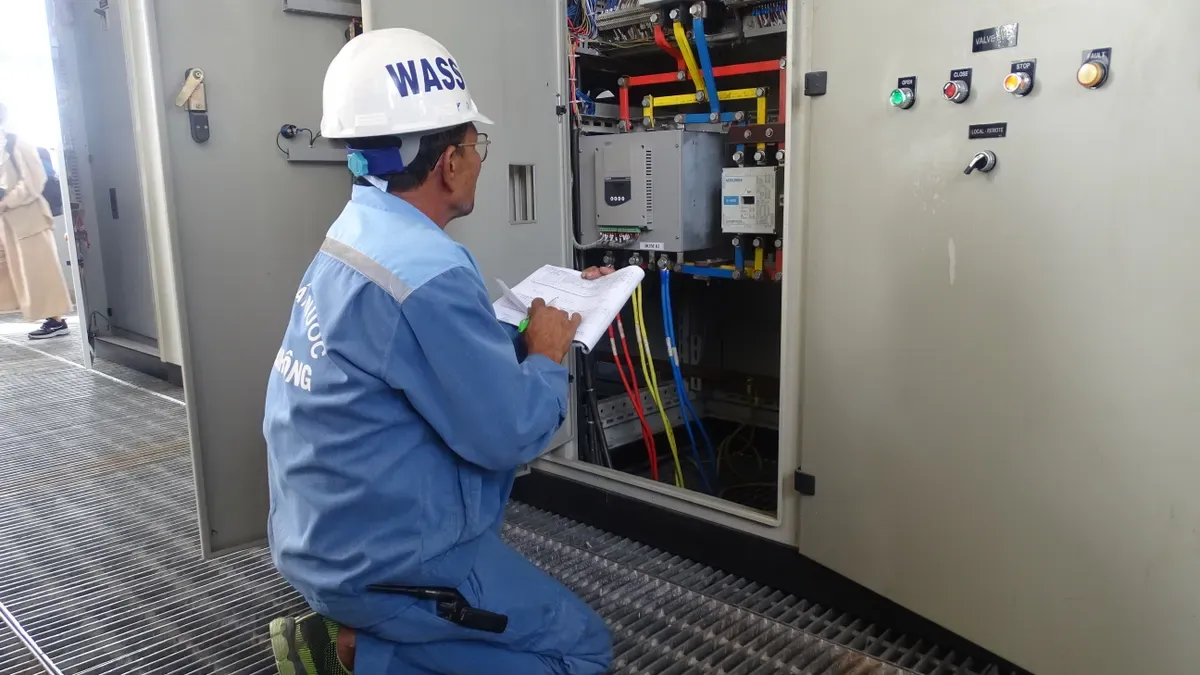
Every standby power system begins with one critical question: how much electricity do you actually need? Guessing leads to an undersized generator that fails during a surge or an oversized unit that wastes fuel and money. You must calculate your essential load with precision. Only then can you match a Cummins diesel generator set to your real-world demands.
Calculate Your Essential Load in Watts
Start by listing every appliance and system you cannot live without during an outage. Include lights, the refrigerator, a well pump, a furnace blower, a sump pump, and any medical equipment. Write down the running wattage for each item. Then note the starting wattage for devices with motors or compressors.
Typical residential standby systems fall within a well-documented range:
|
Source |
Essential Load (kW) |
|---|---|
|
Constellation Home |
5–8 kW |
|
Generac |
10 kW |
Your specific total depends on the appliances you choose to power. Consider a common example. You have a well pump and a refrigerator:
|
Appliance |
Running Wattage |
Starting Wattage |
|---|---|---|
|
Well Pump |
1,000 W |
2,500 W |
|
Refrigerator |
400 W |
1,000 W |
Follow these calculation steps:
-
Total Running Wattage = 1,000 + 400 = 1,400 W
-
Total Starting Wattage = Higher starting wattage (well pump, 2,500 W) + running wattage of the other appliance (refrigerator, 400 W) = 2,900 W
Your generator must supply at least 2,900 W of starting power and 1,400 W of running power. Remember that starting wattage is not always straightforward. Manufacturers often publish locked-rotor amps (LRA) instead of exact starting watts. Two 3/4 HP well pumps from different brands can have dramatically different starting demands. For example, a Franklin pump with 40.7 LRA draws 9,361 VA, while a Pentek pump with 18.0 LRA draws only 4,140 VA. Check the nameplate data, not just the horsepower rating.
Understand kW vs. kVA Ratings
Generators carry two ratings: kilowatts (kW) measure real power, and kilovolt-amps (kVA) measure apparent power. The power factor (PF) connects them. Most diesel generators operate at a 0.8 PF. You convert between them using this formula:
kVA = kW / PF
For a 0.8 power factor, the conversion becomes kVA = kW / 0.8 = kW × 1.25. Use this reference table for quick conversions:
|
kW |
kVA |
|---|---|
|
5 |
6.3 |
|
10 |
12.5 |
|
20 |
25 |
|
50 |
62.5 |
|
100 |
125 |
|
200 |
250 |
|
500 |
625 |
|
1,000 |
1,250 |
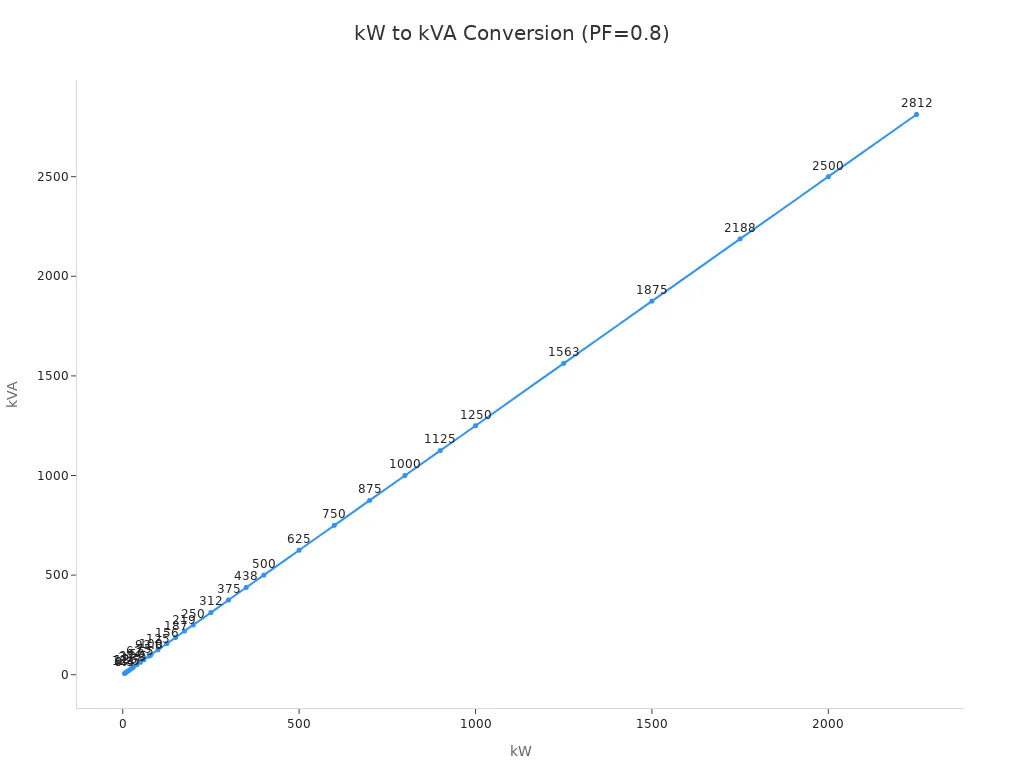
If you have a 100 kW load, you need a generator rated for 125 kVA. One industry thumb rule offers a more conservative estimate:
kVA = kW × 1.56
This formula accounts for both power factor and efficiency, assuming 0.8 for each. Use it as a safety margin when selecting a Cummins diesel generator set for your standby application.
Choose Single-Phase or Three-Phase Power
Your home or facility determines the power type. Single-phase power serves most residential properties. It delivers 120 V or 240 V through two wires. Three-phase power handles commercial and industrial loads. It provides 208 V, 240 V, or 480 V through three wires and supports larger motors and equipment. Check your main electrical panel. If you see two hot wires, you need a single-phase generator. If you see three hot wires, choose a three-phase model. Selecting the wrong type causes compatibility problems and may damage sensitive equipment.
Use a Sizing Calculator for Accuracy
Online sizing calculators offer a quick starting point. They use generic wattage values for common appliances. However, their accuracy is limited:
|
Aspect |
Online Generator Sizing Calculators |
Professional Load Assessments |
|---|---|---|
|
Accuracy level |
Rough estimate only; often inaccurate |
High accuracy; tailored to the specific home |
|
Methodology |
Uses generic wattage values for common appliances |
Performs detailed load calculation and on-site evaluation |
|
Appliance variability |
Cannot account for differences in brand, model, or age |
Identifies actual power requirements |
|
Risks of relying solely on it |
Generator may be undersized or oversized |
Removes guesswork and ensures correct sizing |
|
Code and safety compliance |
Does not verify local codes or panel capacity |
Ensures compliance with local codes and safety standards |
|
Recommended role |
Useful as a starting point or rough gut check |
Essential final step before purchase and installation |
Online calculators cannot see the unique details of your electrical system. A qualified electrician performs a thorough load calculation, inspects your panel, and plans the installation. Consider a calculator a helpful first step, but never a replacement for professional advice.
While an online calculator is an excellent starting point, it can’t see the unique details of your home’s electrical system. That’s why a trustworthy calculator will always end with a clear recommendation: consult a professional. An online estimate can’t replace an on-site assessment from a qualified electrician. A professional visit is essential to confirm the generator size, check your electrical panel’s capacity, and plan the installation logistics.
Accurate sizing ensures your generator handles the starting surge without tripping breakers. It also prevents overspending on unnecessary capacity. Take the time to calculate correctly, and your standby system will serve you reliably for years.
Match Ratings and Features to Your Cummins Diesel Generator Set
You have calculated your essential load. Now you must match that number to the right equipment. Generator ratings, environmental conditions, and feature packages all affect performance. Each decision builds on the last. Get one wrong, and your standby system may fail when you need it most.
Compare Standby and Prime Power Ratings
Generator manufacturers publish two main ratings: standby and prime. These ratings follow ISO 8528 standards, and they mean very different things for how you use your machine.
|
Rating |
Typical Hours |
Load Type |
Overload |
Best For |
|---|---|---|---|---|
|
Standby (ESP) |
Up to ~200 hrs/year |
Variable, outage only |
None |
Backup for commercial buildings |
|
Prime (PRP) |
Unlimited |
Variable |
Yes (limited) |
Construction, remote, temporary sites |
A standby rating assumes short run times during utility outages. The manufacturer permits higher output because the engine rarely operates. A prime rating assumes continuous operation at variable load. The engine is de-rated for durability under those conditions. For example, a generator set might carry a 500 kW standby rating and a 450 kW prime rating. The same machine produces different power levels depending on the rating you select.
This difference affects lifespan significantly. Standby generators reach heavy use at 2,000+ hours. Prime generators approach major service at 10,000+ hours. That gap represents roughly 8,000+ hours of additional life for prime-rated units.
|
Usage Level |
Standby Rated Generators (hours) |
Prime Rated Generators (hours) |
|---|---|---|
|
Low |
0–500 |
0–2,000 |
|
Average |
500–2,000 |
2,000–8,000 |
|
High |
2,000+ |
10,000+ |
For standby power, you need an emergency standby power (ESP) rating. This rating matches your use case. You run the generator only during outages. You do not need the extended durability of a prime rating. However, you must never exceed the standby rating's limits. Overloading a standby-rated machine causes premature wear and may void your warranty.
Factor in Altitude and Temperature Derating
Your generator produces less power in extreme conditions. Altitude and temperature both reduce engine output. You must account for these factors during sizing.
Generators are designed to operate most efficiently near sea level under standard temperature and pressure, and deviations reduce power output, requiring de-rating. High ambient temperature reduces air density and therefore the mass of oxygen available for combustion. British practice does not treat ambient temperatures below 85°F (29.5°C) as a de-rating condition, while American standards usually use 90°F (32°C). For higher temperatures, a de-rating allowance of about 2% to 3% is typically applied for every 10°F increase above the datum.
High ambient temperature lowers air density. Less oxygen enters the cylinders. Combustion efficiency drops, and engine output falls. You may notice lower power, reduced torque, higher fuel consumption, and weaker heavy-load performance. The exact derating percentage depends on your engine model. Always verify against the manufacturer's official derating curve.
Cooling becomes harder in high heat. If coolant runs at about 95°C, the temperature difference falls from roughly 70°C at 25°C ambient to about 45°C at 50°C ambient. Heat transfer drops. Risks increase for high coolant temperature alarms, power reduction, high fan load, and overheating shutdowns. Alternators also suffer. Higher ambient temperature raises winding temperature, which accelerates insulation aging, reduces output capability, and shortens service life.
For 40–50°C environments, you need specific equipment:
-
A tropical heavy-duty radiator
-
Larger airflow capacity
-
Optimized ventilation
Some projects allow 20–30% extra capacity as a margin. This is not a fixed rule. Correct sizing depends on ambient temperature, altitude, load characteristics, engine derating data, and operating hours. A Cummins diesel generator set rated for 100 kW at sea level may only deliver 85 kW at 5,000 feet elevation and 100°F. Always apply derating factors before you finalize your selection.
Select Essential Features for Your Setup
The right features make your standby system convenient, quiet, and safe. You should prioritize three components: the automatic transfer switch, the enclosure, and noise reduction.
The Automatic Transfer Switch (ATS) is the core component enabling seamless standby operation. It constantly monitors utility power. Upon detecting an outage, it signals the generator to start. Once stable power is produced, the ATS disconnects your home from the grid and switches to generator power. This prevents back-feeding and ensures a near-instantaneous transition. When grid power returns, the ATS reverses the process automatically. You do not need to flip any switches or connect any cables.
Your enclosure protects the equipment from weather and debris. A weatherproof enclosure is mandatory for outdoor installation. In coastal areas, aluminum casings resist corrosion better than steel. Wind resistance matters too. Enclosures should be rated to withstand high winds, which is critical for hurricane-prone regions.
Sound attenuation keeps the peace with your neighbors. Modern models operate around 65 dB, which is conversation-level quiet. Features like Quiet-Test™ mode lower noise during self-tests. If your generator sits near bedrooms or property lines, a sound-attenuated enclosure is worth the investment.
Explore Popular Cummins Standby Models
Cummins offers several standby generator lines for residential and light commercial use. The RS series covers home standby needs from 13 kW to 20 kW. These units run on either natural gas or liquid propane. The C-series and QSK series serve larger commercial applications. The QSK engines deliver fuel efficiency ratings up to 10–15% better than older technology. This improvement lowers operational costs for end-users.
Fuel efficiency of the QSK engines is expected to improve by 5–10%, depending on the equipment duty cycle. Tier 4 Final engines also reduce emissions compared to Tier 2 models. The table below shows the comparison:
|
Comparison |
Fuel Efficiency Improvement |
DEF Consumption |
|---|---|---|
|
Tier 4 Final vs. Tier 2 engines |
5% to 10% (depending on duty cycle and application) |
2% to 3% relative to fuel consumption |
These improvements matter for standby applications. Lower fuel consumption extends runtime on a fixed tank. Lower emissions help you meet local air quality regulations. When you evaluate a Cummins diesel generator set, check the emissions tier and fuel efficiency ratings. These factors affect long-term operating costs.
Why LEHUI Standby Solutions Stand Out
LEHUI complements your Cummins generator set with reliable standby equipment and support. LEHUI designs enclosures, transfer switches, and fuel systems that integrate seamlessly with Cummins engines. The brand focuses on durability and ease of installation.
LEHUI standby solutions offer several advantages:
-
Custom enclosure options that match your site requirements
-
Transfer switches tested for rapid response and reliability
-
Fuel tank systems sized for your desired runtime
-
Technical support that understands Cummins integration
When you pair a LEHUI enclosure with your generator, you get a complete standby package. The enclosure protects your investment. The transfer switch automates your power transition. The fuel system keeps you running through extended outages. LEHUI products undergo rigorous testing to ensure they perform when called upon.
Choosing the right Cummins diesel generator set involves more than picking a kW rating. You must match the rating type to your usage. You must apply altitude and temperature derating. You must select features that fit your site and lifestyle. And you must consider the supporting equipment that makes your system complete. LEHUI provides that supporting equipment with a focus on quality and compatibility.
Plan Fuel, Installation, and Maintenance
Your generator needs fuel, a proper site, and regular service. These three factors determine whether your standby system delivers power when the grid fails.
Size Your Diesel Fuel Tank for Desired Runtime
You must calculate fuel consumption before you select a tank. A 20 kW generator burns different amounts depending on load:
|
Generator Capacity |
25% Load |
50% Load |
75% Load |
100% Load |
|---|---|---|---|---|
|
20 kW |
0.6 gal/hr |
0.9 gal/hr |
1.3 gal/hr |
1.6 gal/hr |
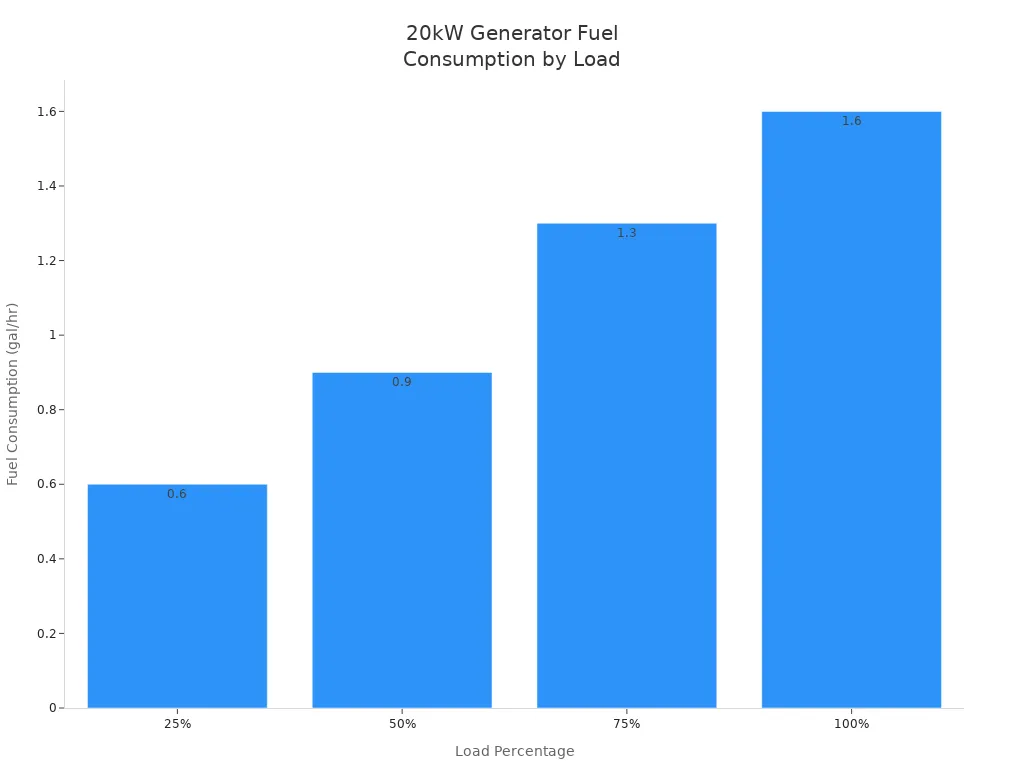
At 75% load, a 20 kW unit consumes roughly 1.3 gallons per hour. Diesel generators typically use about 0.055–0.07 gallons per rated kW per hour at this load level. Multiply your hourly consumption by your desired runtime. A 48-hour runtime at 75% load requires approximately 62 gallons of storage.
Multiply the chart's gal/hr figure by 24 to estimate daily consumption.
Prepare Your Site for Safe Installation
NFPA 37 sets clear requirements for generator placement. You need a minimum of 5 feet separation from building openings, doors, windows, vents, and combustible walls. Your local authority having jurisdiction may require different spacing based on your enclosure's listing. Ventilation matters equally. The installation must provide adequate intake air for combustion and proper discharge of hot air. Keep intake and exhaust paths unobstructed. Check that louvers and dampers move freely.
Follow a Routine Maintenance Schedule
A Cummins diesel generator set requires service at specific intervals. Follow this schedule:
-
250 Hours or 6 Months – Routine checks and fluid changes.
-
1,500 Hours or 1 Year – Intermediate maintenance, fuel system service, and valve adjustments.
-
6,000 Hours or 2 Years – Comprehensive inspection, component replacement, and overhaul work.
|
Maintenance Item |
Interval (Hours) |
Interval (Months) |
|---|---|---|
|
Engine Oil |
400 |
4 |
|
Engine Oil Filter |
400 |
4 |
|
Fuel Filter |
400 |
4 |
|
Coolant (C/L/Z & B/D Series) |
2000 |
24 |
|
Air Filter (Clean) |
100 |
— |
|
Air Filter (Replace) |
500 |
— |
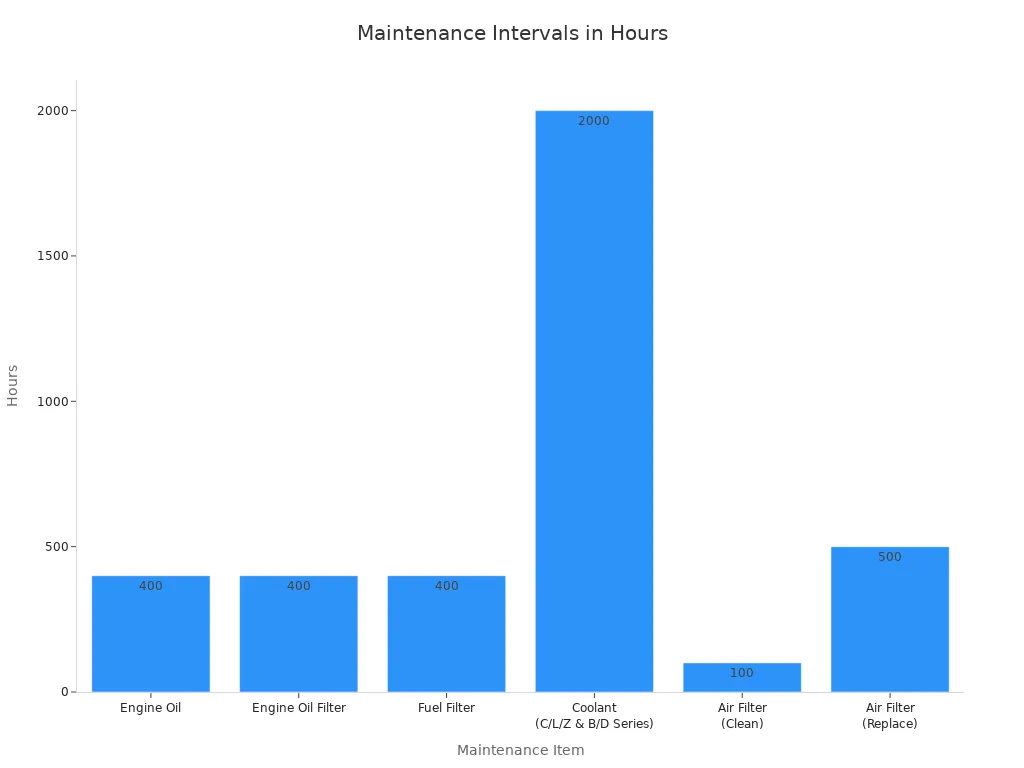
Every 250 Hours or 3 Months Maintenance (Cummins Engine)
Stick to this schedule. Your Cummins diesel generator set will reward you with reliable performance for years.
Calculate your essential load, apply a 20% safety margin, and select a standby-rated Cummins diesel generator set. Prioritize an automatic transfer switch and sound-attenuated enclosure. Verify EPA or CARB emissions compliance. Consider LEHUI for reliable standby equipment and support. Always consult a certified Cummins dealer for final sizing and installation guidance.
FAQ
How do I know if my Cummins generator is oversized?
You waste fuel and money with excess capacity. Compare your calculated essential load against the generator's standby rating. A unit more than 30% above your peak demand is likely oversized.
Can I install a Cummins standby generator myself?
No. You need a certified electrician for proper installation. They handle the automatic transfer switch wiring, fuel connections, and local code compliance. DIY installation voids your warranty and creates safety hazards.
What maintenance does a Cummins diesel generator require?
Follow the manufacturer's schedule. Change engine oil and filters every 400 hours. Service the fuel system annually. Inspect coolant and air filters regularly. Routine maintenance ensures reliable performance during outages.